YOU DON’T LOOK PUERTO RICAN SERIES
“Le Chevallier presents a deep meditation on identity and personal narrative in this thought-provoking body of work. This moment is seized in vails of white paint and images of Taino and botanical motifs with dates of significant episodes in the memory of the artist and in doing so explores what it means to be a “white” Boricua living on the mainland.”
Peter Marin , Gallery Curator, Diamante Arts and Cultural Center, Raleigh NC, 2024
“The You Don’t Look Puerto Rican exhibition is NOT TO BE MISSED! Photos cannot capture the layers in these seemingly simple canvases. Georges approaches language and culture head-on with a somber poetry.”
Sterling Bowen, Art Contributor, Painting After Art is Dead blog, 2024
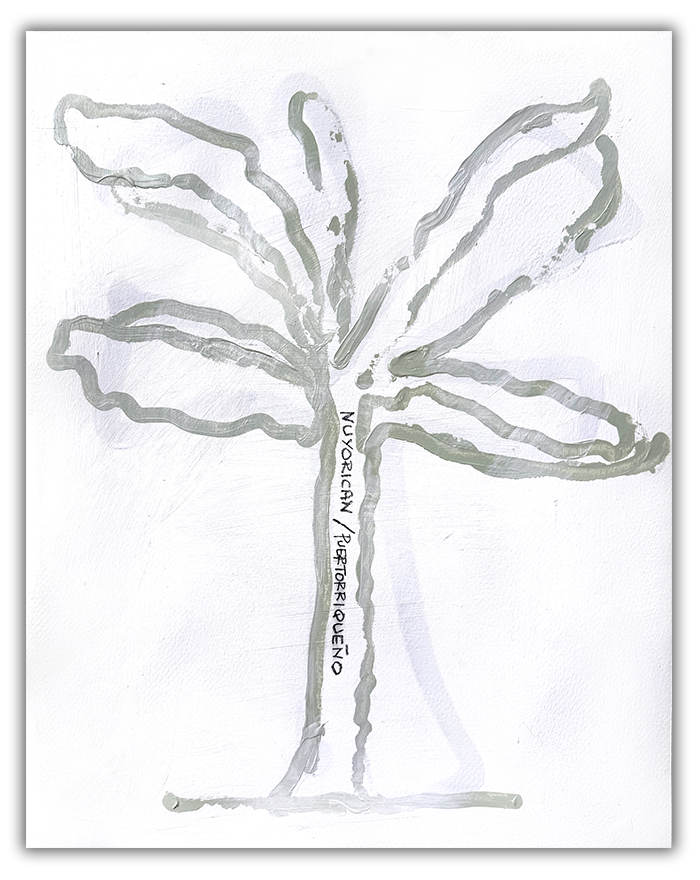
Nuyorican / Puertorriqueño
Charcoal, Acrylic and Aerosol Paint on Paper / 17”x22” / 2026
One of the biggest examples of the relationship between Puerto Rico and the United States is the tension between island-born Puerto Ricans and Nuyoricans (Puerto Ricans born or raised in the U.S. mainland, primarily New York). This tension stems from debates over cultural authenticity, language, and geography. Island Puerto Ricans often view mainland-raised Nuyoricans as overly Americanized due to language barriers and urban U.S. cultural blending. Conversely, Nuyoricans frequently feel rejected by their homeland despite fiercely embracing their heritage, creating a historic cultural friction that persists even as the diaspora heavily shapes global Puerto Rican art and identity.
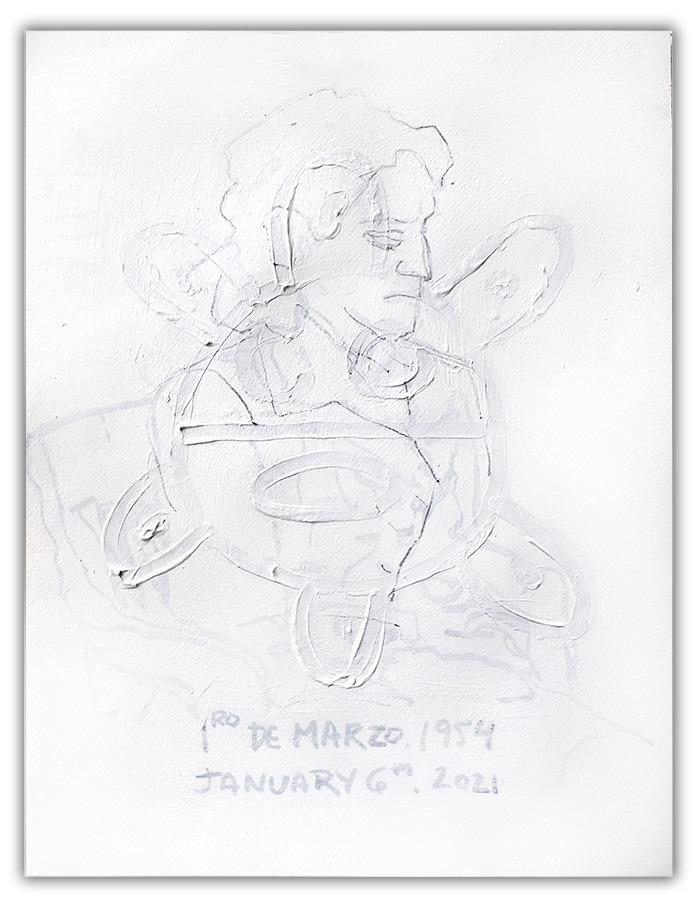
1 de Marzo 1954 / January 6, 2021
Charcoal, Acrylic and Aerosol Paint on Paper / 17”x22” / 2026
On March 1, 1954, four Puerto Rican nationalists, lead by Lolita Lebron, attacked the Capitol building in Washington DC to draw worldwide attention to Puerto Rico’s struggle for independence from United States control. The assailants were arrested, tried successively in two federal courts and convicted. All received long consecutive sentences, amounting to life imprisonment.
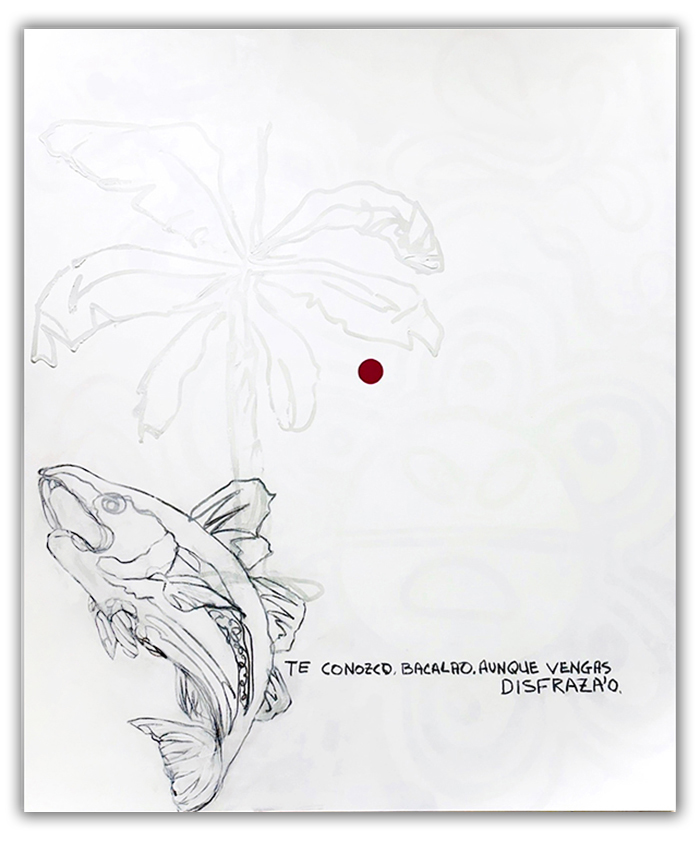
Te Conozco Bacalao
Acrylic Paint on Canvas / 72”x 60” / 2025
“Te conozco, bacalao, aunque vengas disfraza’o,” also the title of a 1970s song by Héctor Lavoe and Willie Colón, translates to “I know you, codfish, even in disguise.” The saying stems from codfish’s strong, salty flavor, often masked with sauces and spices, and today is used to call out deception. Interestingly, bacalao, central to dishes like bacalaitos and bacalao guisado, is not native to Puerto Rico but imported from the North Atlantic during colonial times. Preserved through salting, it became a staple. Its presence reflects colonial legacy: an island rich in native fish relying on an imported one for tradition.
——————————————————————–
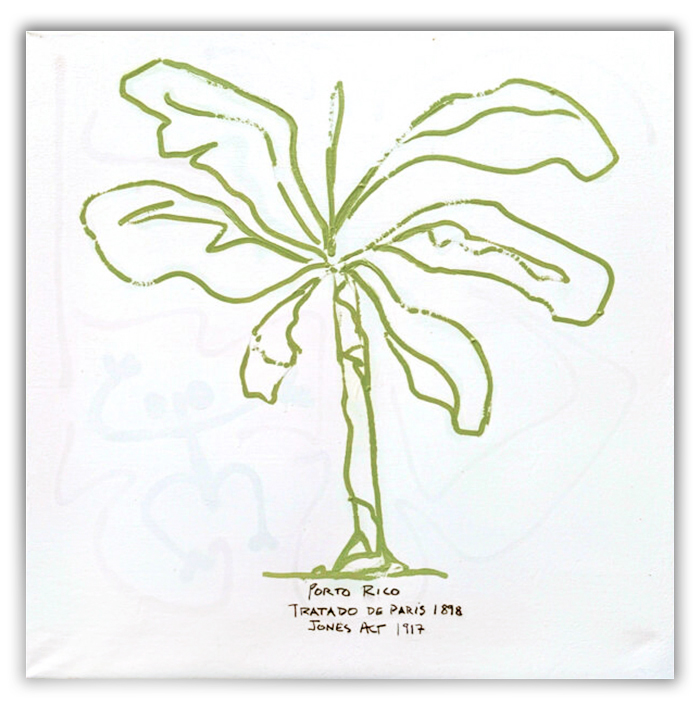
Porto Rico
Acrylic Paint on Canvas / 48”x 48” / 2024
This piece examines the treaties that transformed Puerto Rico into a U.S. colony, including the renaming of the island to Porto Rico. In 1898, after The Spanish American War, the United States took possession of Puerto Rico from Spain. In 1917, Puerto Ricans were given the US Citizenship (without any rights to vote on the Island’s Governor or the US President) and were immediately drafted to fight abroad in World War l.
–
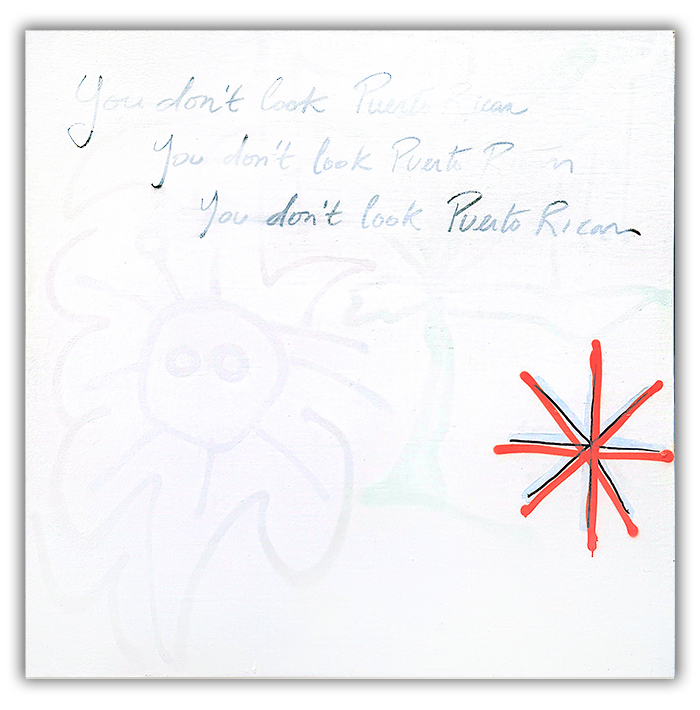
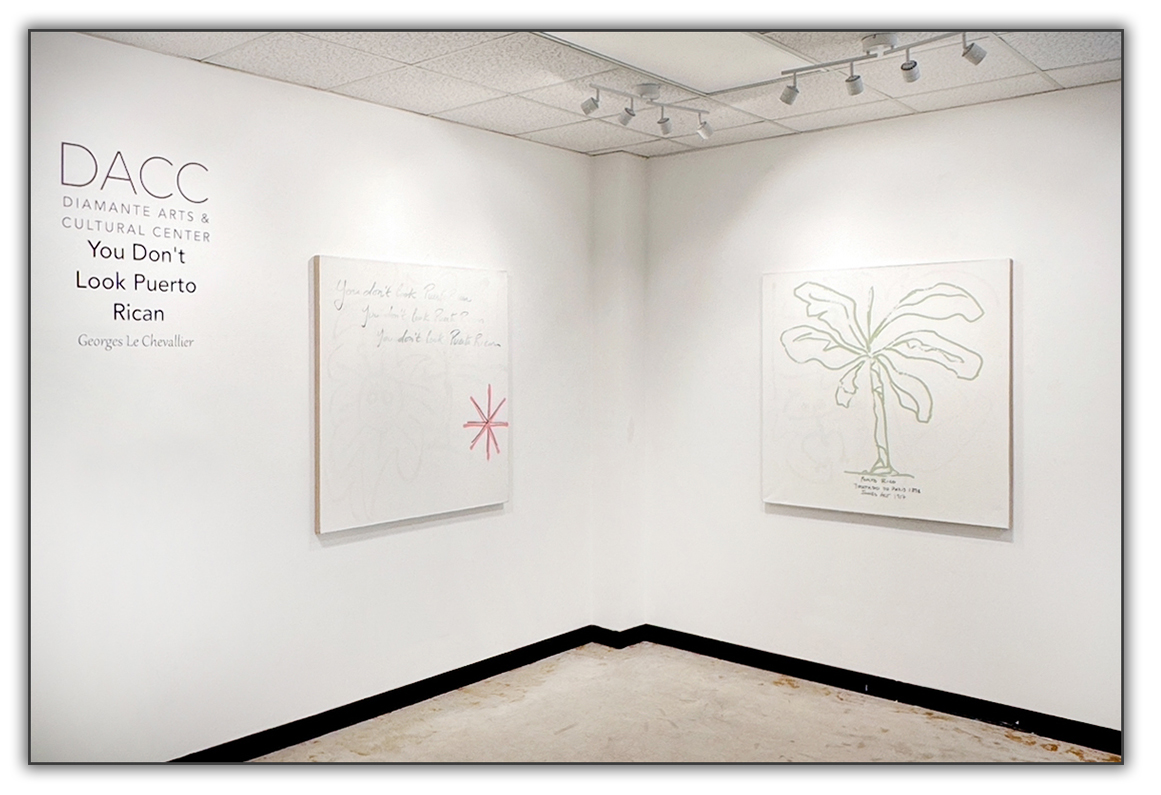
You Don’t Look Puerto Rican
Acrylic Paint on Canvas / 48”x 48”/ 2024
As an adult, I have traveled widely, but wherever I go, I often encounter the same question: “But you don’t look Puerto Rican?” This is a reality that many Latinx people who don’t fit a certain stereotype experience all the time. It’s almost as if we are forgotten Latinos: we belong 100% to our culture, but physically, we don’t fit here nor there.
–
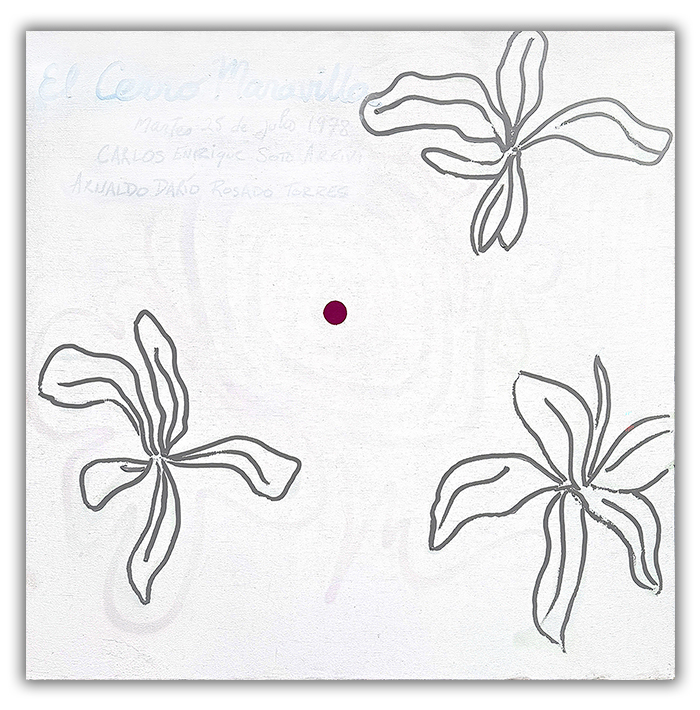
El Cerro Maravilla
Acrylic Paint on Canvas / 60”x 60” / 2024
This painting addresses one of my most vivid recollections from growing up in Puerto Rico – the Cerro Maravilla massacre, a government cover-up in which two young pro-independence activists were murdered by a police ambush in 1978.
–
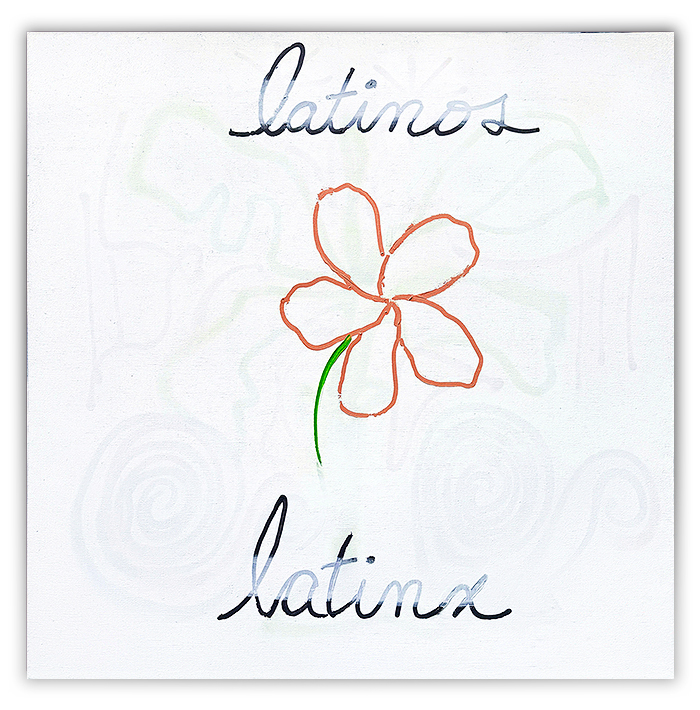
Latinos Latinx
Acrylic Paint on Canvas / 60”x 60” / 2024
This painting explores the evolving language of Latin American identity in the United States through the tension between “Latino” and “Latinx.” By examining the acceptance, rejection, and cultural meaning of these terms, the work considers how language becomes a site of negotiation, shaping ideas of identity, belonging, gender, and cultural heritage. Critics argue that “Latinx” does not align with traditional Spanish grammar and is often perceived as a term imposed by U.S. academic or political circles rather than one that developed organically within Spanish-speaking communities.
–
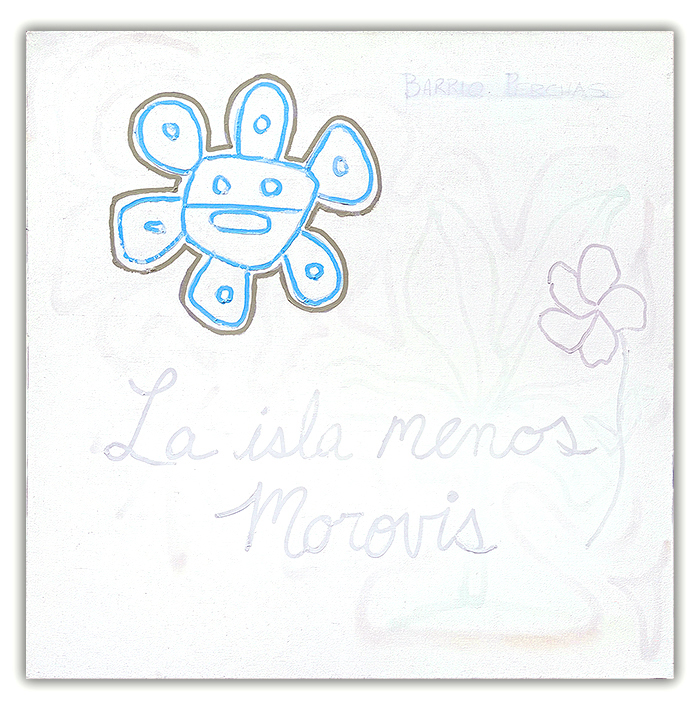
La Isla Menos Morovis
Acrylic Paint on Canvas / 60”x 60” / 2024
La Isla Menos Morovis, (The Island minus Morovis) is a saying in Puerto Rico about a cholera outbreak in the 1880’s hitting the whole island of Puerto Rico except for the small and remote mountain region of Morovis. My mother was born in Morovis in the 1930’s in extreme poverty, the daughter of a Jibaro who worked in a coffee plantation.
–
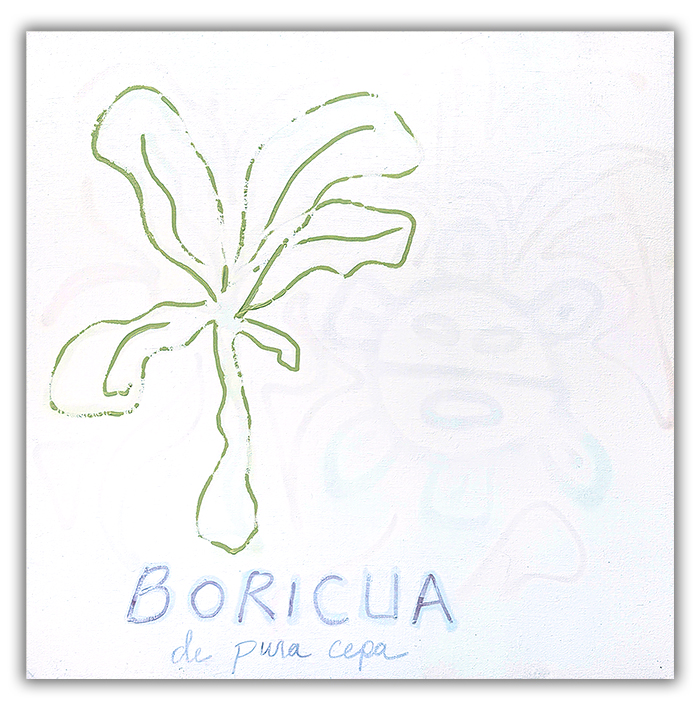
Boricua de Pura Cepa
Acrylic Paint on Canvas / 60”x 60” / 2024
“Boricua de Pura Cepa” refers to someone from Puerto Rico. “Boricua” is an indigenous term to refer to a person from Puerto Rico, and “de Pura Cepa” translates to “of pure strain.” This painting delve into Puerto Rican slang, a blend of Spanish, English, and African dialects, reflecting the island’s complex cultural identity.
–
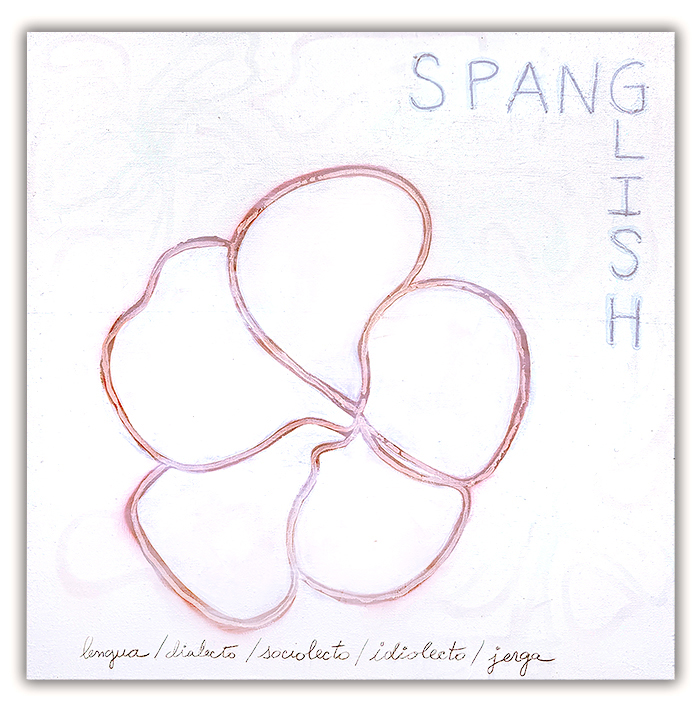
Spanglish
Acrylic Paint on Canvas / 60”x 60” / 2024
This painting explores how the Spanish language evolves as it intersects with the Latinx immigrant experience in the U.S.
–
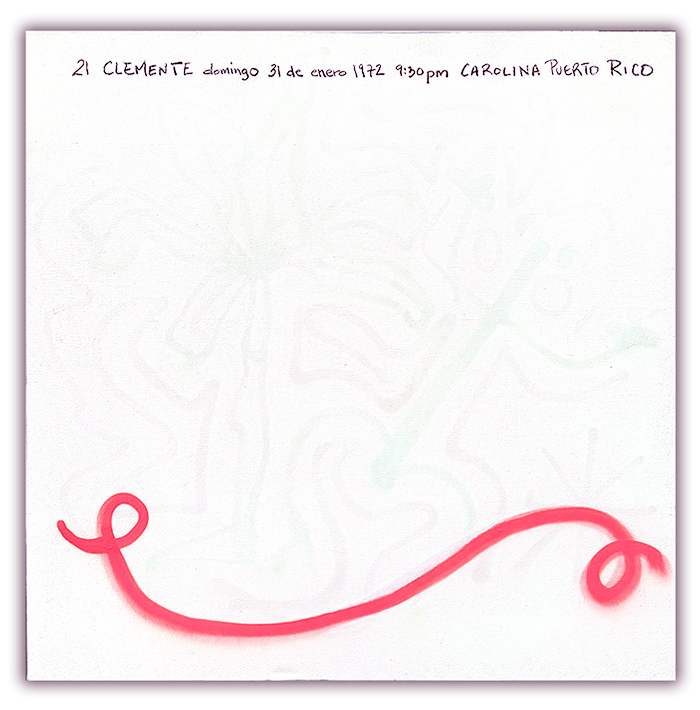
21 Clemente
Acrylic Paint on Canvas / 60”x 60” / 2024
This painting deals with one of my earliest memories growing up in Puerto Rico: the death of Puerto Rican baseball player Roberto Clemente. Clemente died on New Year’s Eve in a plane crash while delivering aid to Nicaragua after a massive earthquake in Managua. Since then, he has become a symbol of generosity and sacrifice in both Puerto Rico and the United States.
–
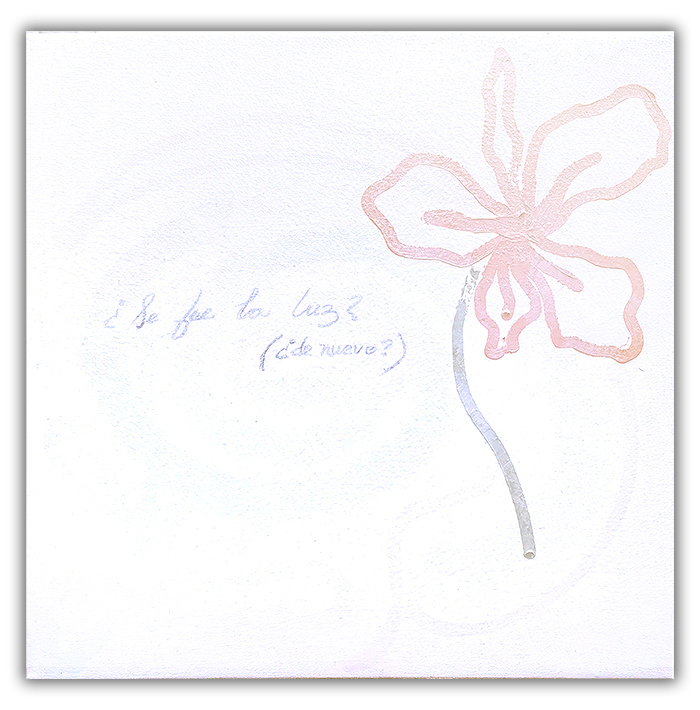
¿Se Fue la Luz? (¿De Nuevo?)
Acrylic Paint on Canvas / 24”x 24” / 2024
¿Se Fue La Luz? ¿De Nuevo? (Are the Lights Out? Again?) is a common Puerto Rican expression that reflects the frequent power outages caused by U.S. energy policies toward the island.
–
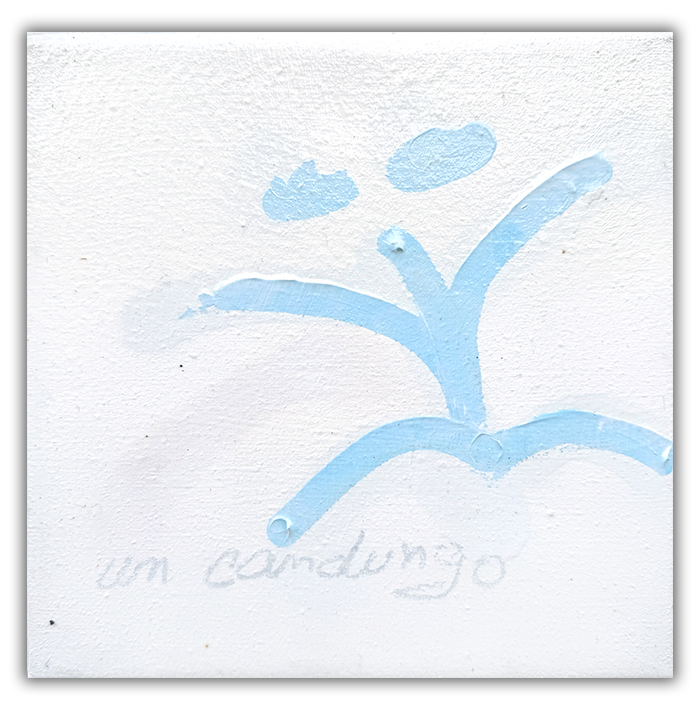
Un Candungo
Acrylic Paint on Canvas / 8”x 8” / 2024
“Un Candungo” refers in Puerto Rico to a big container. These smaller works delve into Puerto Rican slang, a blend of Spanish, English, and African dialects, reflecting the island’s complex cultural identity.
–
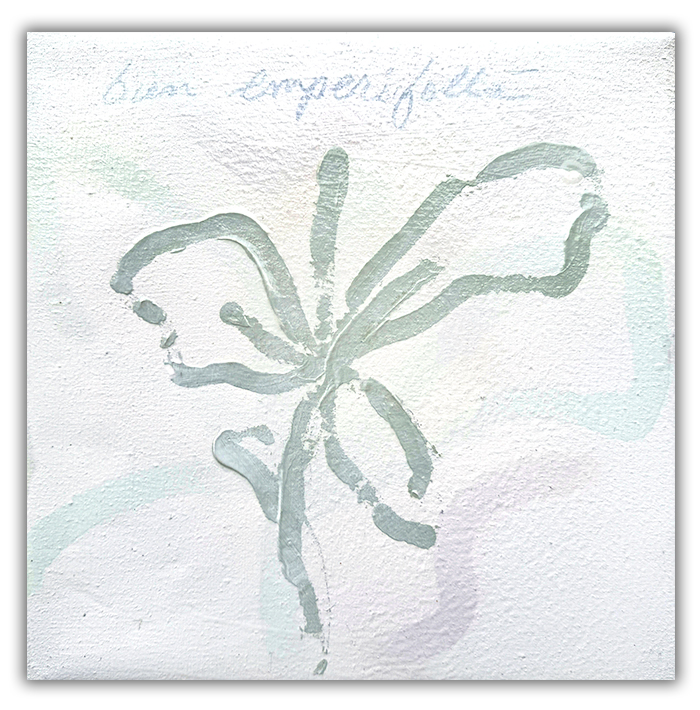
Bien Emperifolla
Acrylic Paint on Canvas / 12”x 12”/ 2024
“Bien Emperifolla” refers in Puerto Rico to a woman getting dolled up to the point of being overly adorned, excessively made-up, or wearing flashy, ornate accessories. These smaller paintings delve into Puerto Rican slang, a blend of Spanish, English, and African dialects, reflecting the island’s complex cultural identity.
.
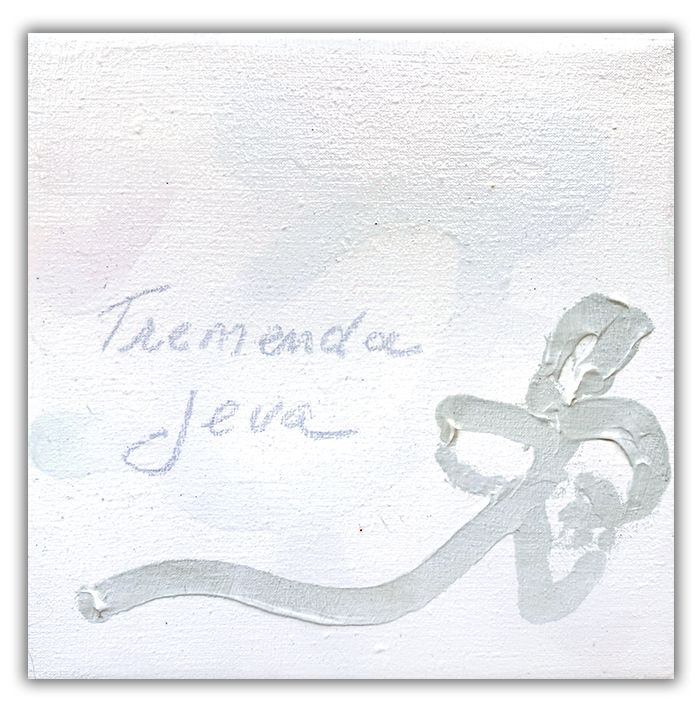
Tremenda Jeva
Acrylic Paint on Cavas / 8”x8” / 2024
“Tremenda Jeva” refers in Puerto Rico to a good-looking woman. These smaller works delve into Puerto Rican slang, a blend of Spanish, English, and African dialects, reflecting the island’s complex cultural identity.
.
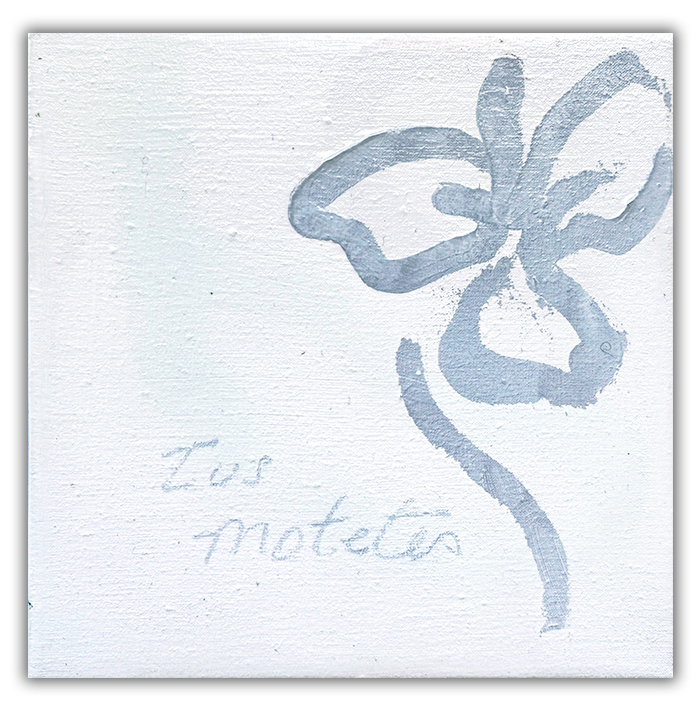
Tus Motetes
Acrylic Paint on Canvas / 8”x8” / 2024
“Tus Motetes” refers in Puerto Rico to personal belongings. These smaller works delve into Puerto Rican slang, a blend of Spanish, English, and African dialects, reflecting the island’s complex cultural identity.
.
.